

You can tackle some mild cases of cat ringworm at home, but you’ve got to jump on it fast. Try gentle antifungal shampoos or creams, keep the infected cat away from others, and clean everything—bedding, surfaces, you name it—all while watching for signs that mean you need a vet.
Use gentle antifungal shampoos or creams, isolate the infected cat, and clean bedding and surfaces to stop spread while watching for signs that need a vet.
This post covers what ringworm looks like, how to try safe DIY topical and bath treatments, how to disinfect your home, and which home remedies just aren’t worth it. You’ll get clear steps to protect your cat and your household without making things worse.
Understanding Cat Ringworm
Ringworm in cats is a fungal infection that messes with skin, hair, and sometimes claws. Here’s what causes it, how it spreads, and whether it can jump to people or other pets.
What Is Ringworm in Cats
Ringworm (dermatophytosis) isn’t a worm at all. It’s a fungus that gobbles up keratin in skin, fur, and claws.
In cats, Microsporum canis is the usual culprit, creating round, scaly patches with hair loss.
Lesions can hide under fur, so you might not spot them right away. Watch for circular bald spots, scabs, itching, or brittle hair.
Some cats show no symptoms but still carry spores.
Diagnosis usually means a fungal culture, a woods lamp exam, or a microscopic look at hair and skin.
Causes and Transmission
Dermatophyte fungi like Microsporum canis hang out in the environment and on infected animals. Your cat can pick up ringworm from another infected animal, dirty bedding, grooming tools, or even soil.
Spores stick to fur and flea combs and can survive for months in carpets and furniture.
Young, old, and stressed cats have weaker immune systems and get infected more easily.
Cleaning and disinfecting the home is key—treating the cat alone won’t cut it.
Use diluted bleach on hard surfaces and wash bedding on hot to knock down the spore count.
Is Cat Ringworm Zoonotic
Yep, ringworm in cats is zoonotic. You and your other pets can catch it.
Humans usually get round, itchy, red rings on the skin—hands, arms, and face are common spots.
Risk shoots up if you handle a sick cat barehanded or touch contaminated stuff.
Kids, older folks, and anyone with a weak immune system are at higher risk.
If you or someone in your family gets a weird rash after contact, see a healthcare provider.
Isolate the infected cat and stick to good hygiene: wash hands after handling, wear gloves, and clean the house to help stop the spread.
Recognizing Symptoms and Diagnosis
You can spot common signs at home and know what tests your vet will use.
Look for hair loss, scaly skin, and broken hairs—be ready to share when and where the lesions started.
Common Signs and Lesions
Ringworm usually causes circular patches of hair loss with scaly or crusty skin.
These show up most often on the face, ears, and paws, but honestly, they can pop up anywhere.
You might see brittle or broken hairs at the edge of a lesion.
Sometimes the center of a patch looks clearer, making that classic ring shape.
Affected skin might be red or inflamed and your cat could groom or scratch more than usual.
Kittens and long-haired cats sometimes just get dandruff or small clumps of fur missing.
Check under the collar, around the tail base, and inside the ears—ringworm likes to hide.
How Cat Ringworm Is Diagnosed
A vet will start with a physical exam and ask when you noticed lesions and if anyone else has skin problems.
They’ll look at hairs and skin under a microscope after plucking some from the edge of lesions.
The vet might use a Wood’s lamp; some Microsporum canis strains glow green under it, but not all do.
Other skin issues look like ringworm, so vets use a combo of exam and lab tests to nail down the diagnosis.
Bring photos and note changes over time—it really helps your vet figure out how contagious or serious it is.
Fungal Culture and Other Diagnostic Methods
A fungal culture is the gold standard.
The vet collects hair and skin bits with a toothbrush or scalpel and puts them on special media.
It can take 1–3 weeks for the culture to grow and show which fungus is there.
A quick look under the microscope can give clues right away by showing fungal spores or damaged hairs.
Some clinics use PCR tests for faster, more specific results, but not all have them.
Trust your vet’s testing plan—getting it right means you won’t waste time on the wrong treatment.
When to Consult a Veterinarian

If home care isn’t shrinking lesions, the infection spreads, or someone in your house gets skin sores, it’s time for the vet.
A vet can confirm what’s going on, prescribe oral antifungals, and help you with cleaning and quarantine.
Limitations of Home Treatment
Home remedies like medicated shampoos or lime sulfur dips can help mild, small patches.
They’re just not enough for deep or widespread infections, and can’t replace oral antifungals if the fungus has burrowed into hair follicles or deeper skin.
If there’s no improvement after two weeks of topical treatment, or new spots keep popping up, see your vet.
They can run a fungal culture or use a Wood’s lamp to confirm ringworm and rule out other stuff.
The vet might prescribe oral meds like itraconazole or terbinafine and will guide you on dosing.
Warning Signs That Need Professional Attention
Get your cat to the vet right away if it’s super itchy, losing big patches of fur, has sores that ooze or bleed, or seems tired and won’t eat.
Those could mean a bad infection, a secondary bacterial problem, or a weak immune system.
If anyone in your home gets red, circular rashes or scalp spots, call your doctor and the vet.
Ringworm can pass to humans, and it’s riskier for young kids, the elderly, or anyone immunocompromised.
Asymptomatic Carriers and Recurrent Infections
Some cats carry ringworm spores without showing any signs and can infect others.
If one pet tests positive, ask your vet about checking the rest—even if they look fine.
If infections keep coming back, think about environmental contamination or a silent carrier.
Your vet might suggest deep cleaning, hot washing, and diluted bleach on hard surfaces.
They could also recommend longer treatment or repeat cultures to make sure you’ve cleared it.
Topical DIY Treatments for Mild Cases
You can treat small, mild ringworm spots at home with topical products that hit the fungus directly.
Stick with safe, proven stuff, dilute it right, and check the area daily for progress or spreading.
Lime Sulfur Dip at Home
Lime sulfur dip is a strong antifungal used by vets to kill spores on skin and hair.
You can buy the concentrate for pets—just follow the label for mixing and how long to leave it on.
Wear gloves and protect your workspace—lime sulfur stains and the smell is pretty rough.
Apply with a sponge or soak the spots for 5–10 minutes (or as the label says).
Repeat every 3–7 days until the lesions clear, then keep going for another week.
If your cat’s skin gets more red, swollen, or loses more fur, stop and check with your vet.
Don’t use on kittens younger than the label says, or on cats with open wounds unless your vet says it’s okay.
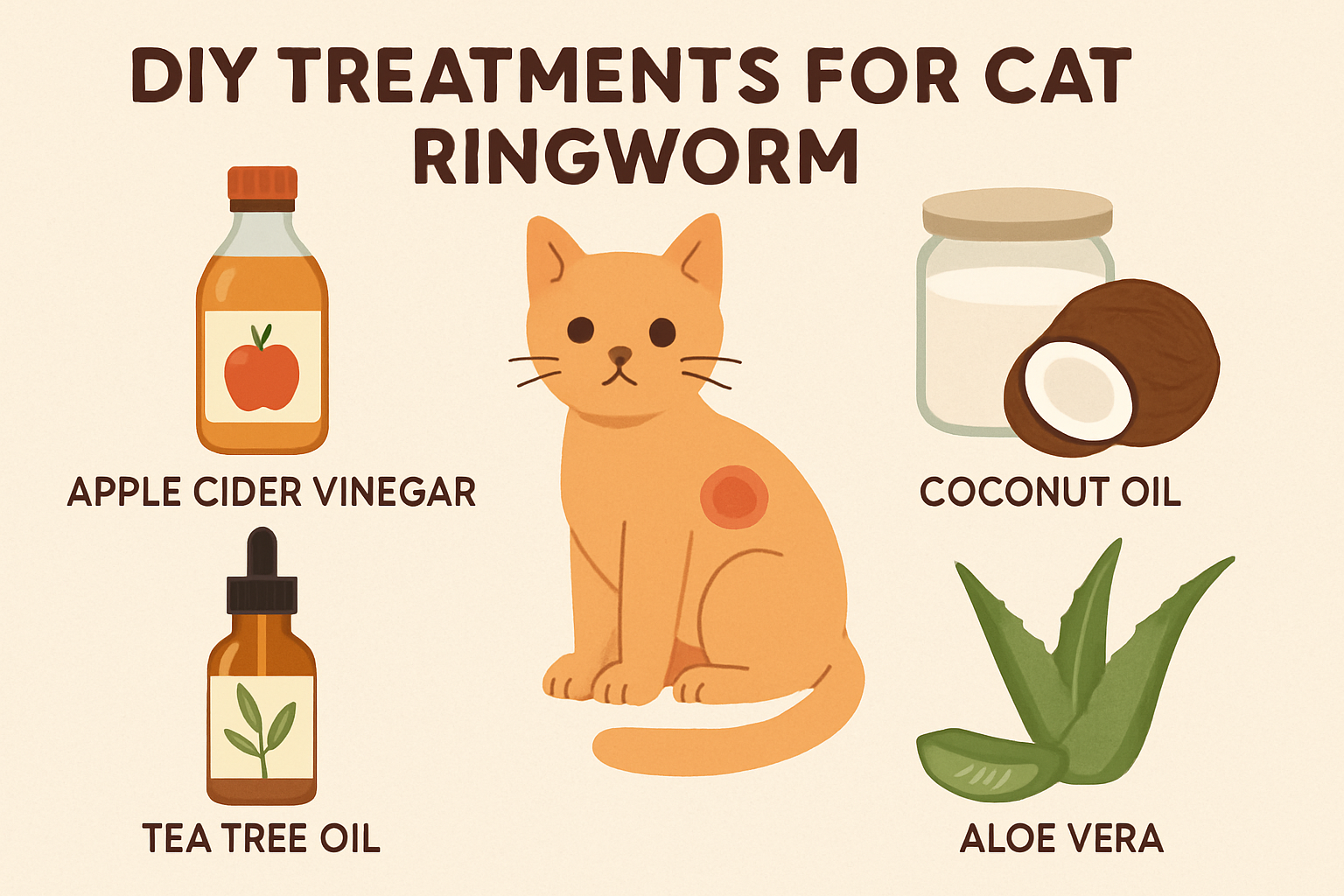
Apple Cider Vinegar Applications
Apple cider vinegar (ACV) has some antifungal power and can help control surface spores.
Mix it 1:1 with water for sensitive skin.
Dab onto lesions with a cotton ball two or three times a day—don’t pour it over large areas or on raw skin.
If your cat licks the spot, try an Elizabethan collar until it dries.
If the skin stings or gets red, stop using ACV.
It might help control the spread but won’t cure deep or widespread infections, so watch for improvement in a week or two.
Antifungal Creams and Ointments
Topical creams with miconazole, clotrimazole, or terbinafine work for small, localized spots.
Pick a product for pets or humans (ask your vet if unsure) and use as directed.
Put on a thin layer twice daily, and keep going for 7–14 days after the spot looks healed to keep it from coming back.
Clean and dry the area first.
If your cat keeps licking the cream, use a cone or cover to stop them.
If things spread, smell off, or don’t get better in two weeks, you’ll need systemic treatment from your vet.
Aloe Vera and Coconut Oil
Aloe vera gel can calm irritated skin and has a bit of antimicrobial action.
Use pure, skin-safe gel (not the whole leaf kind) and dab it on one or two times a day.
If your cat licks it and gets an upset stomach, stop right away.
Coconut oil has some antifungal activity and helps the skin’s barrier.
Warm a little and rub into the spot once a day.
It can make fur greasy and attract licking, so only use on small areas—and maybe use a cone.
Neither aloe nor coconut oil will cure ringworm alone, but they can support healing alongside antifungals.
Medicated Baths and Oral Treatments
Medicated baths help wash away fungal spores from your cat’s coat and skin.
Oral meds go deeper, and vets often use both for stubborn cases.
Using Antifungal Shampoos
Medicated shampoos contain antifungals like ketoconazole or chlorhexidine.
Bathe your cat in lukewarm water, work the shampoo in for 5–10 minutes, and rinse well.
Repeat baths once or twice a week, or as your vet suggests.
If your cat’s a kitten or gets stressed, ask about lime sulfur dips or a milder ketoconazole shampoo.
Lime sulfur does a good job but smells strong and can dry skin, so watch for irritation.
Always wear gloves and keep the cat isolated during and after the bath.
Clean bedding and surfaces after each wash to help stop the spread.
Popular Oral Antifungal Medications
Vets prescribe oral meds when ringworm is widespread or deep in the hair follicle.
Common choices are itraconazole, fluconazole, and griseofulvin.
Itraconazole often works faster and has fewer drug interactions, but it’s pricey.
Fluconazole sometimes gets used for certain strains, but doesn’t always work as well.
Griseofulvin is an older option, still used for kittens and chronic cases, but it can upset stomachs and takes longer.
Your vet will pick what fits your cat’s age, health, and test results.
Follow dosing and duration carefully, and call your vet if you see vomiting, appetite loss, or jaundice.
Environmental Decontamination and Hygiene
You’ve got to remove loose hairs, wash fabrics, and disinfect hard surfaces if you want to stop the spread. Stick with daily vacuuming, use a safe bleach solution, and keep the infected cat confined until treatment wraps up.
Thorough Cleaning and Vacuuming
Vacuum all floors, rugs, and upholstered furniture every day. If you have a vacuum with a high-efficiency filter, use it, and dump the bag or canister into a sealed trash bag each week.
After vacuuming, grab a lint roller or a damp cloth and go over fabric surfaces to pick up hairs the vacuum missed. It’s honestly surprising how much still gets left behind.
Launder bedding, towels, and any washable pet items separately on a long, hot cycle. Dry everything fully.
Toss out items that can’t be cleaned, like old cat trees or well-loved stuffed toys, or just stash them away until the infection’s gone.
Wipe hard floors, baseboards, and shelves with detergent first to get rid of debris. Always remove visible hair before using disinfectant, since dirt messes with how well it works.
Bleach Solution Disinfection
Mix up a fresh household bleach solution—about 1:100 (one part bleach to 100 parts water)—for regular disinfection. Only do this in a well-ventilated spot, wear gloves, and never mix bleach with other cleaners.
Use the solution on nonporous surfaces like tile, linoleum, or sealed wood. Let it stay wet for at least 5 minutes.
If you’re worried about damage, rinse or wipe surfaces afterward and test a small area first. Bleach can fade or harm some materials, so don’t take chances.
Skip bleach on fabrics or porous stuff you want to keep. For those, stick with machine washing or go for a commercial accelerated hydrogen peroxide product labeled for dermatophytes.
Always check the label for contact times and storage tips for any disinfectant you use.
Quarantine and Isolation Procedures
Keep the infected cat in one easy-to-clean room with hard floors—think bathroom—until your vet says the infection’s cleared. Try to keep other pets and people out, and handle the cat only with disposable gloves and clean clothes.
Keep the litter box, food bowls, and bedding in that room and clean them every day. Wash food bowls in hot, soapy water and launder bedding separately each time.
Replace or toss non-washable items the cat uses. If you’re not sure, just don’t risk it.
Vacuum daily, launder bedding daily, and disinfect hard surfaces twice a week or as your vet recommends.
Supporting Recovery and Preventing Recurrence
After treatment, your cat needs a little extra care to clear out spores and keep the infection from coming back. Focus on immune support, regular coat care, reducing stress, and adding healthy fats for the skin.
Boosting Immune System with Probiotics
Probiotics can help your cat’s gut health and immune system. Pick a product made for cats that lists specific strains—like Enterococcus faecium or Bifidobacterium—and follow the dosing on the label or your vet’s advice.
Give probiotics daily during and after antifungal treatment for at least 4–8 weeks. This helps stabilize gut flora, especially if your cat took oral meds or antibiotics.
Watch for firmer stools and more energy. If you notice vomiting or worse diarrhea, stop and check with your vet.
Store powders or capsules as the instructions say to keep the good bugs alive.
Importance of Regular Grooming
Frequent grooming gets rid of dead hair and fungal spores, which means less contamination around your home. Brush your cat with a soft brush at least every other day. Use a towel or lint roller to catch loose fur after brushing.
If your cat puts up with it, use medicated or antifungal shampoos on the schedule your vet gives—usually once or twice a week. Dry the skin well after to keep fungus from coming back.
Wear gloves when grooming an infected cat. Wash your hands and tools with hot, soapy water or a 1:10 bleach solution after each session.
Vacuum soft surfaces and wash bedding weekly in hot water.
Stress Reduction and Dietary Support
Stress knocks down immunity and can drag out recovery. Try to keep your cat’s routine steady—quiet resting spots, set feeding times, and short daily play sessions help lower anxiety.
Check your cat’s diet for enough protein and micronutrients. Most high-quality commercial cat foods cover these bases.
If you think your cat’s missing something, ask your vet about a blood test before grabbing supplements.
Don’t make sudden changes; introduce new foods slowly over a week or so. If you’re considering pheromone diffusers or calming supplements, talk it over with your vet first.
Omega-3 Fatty Acids for Skin Health
Omega-3s can calm skin inflammation and help heal irritated patches. Use fish-oil supplements made for cats, or pick a brand and dose your vet recommends.
You’ll probably need to give omega-3s daily for a few weeks to see improvement. Look at the label for EPA and DHA concentrations—those specifics matter more than just “omega.”
Keep an eye on your cat’s stool and appetite. Too much oil can cause loose stools.
If you see any digestive trouble, stop the supplement and let your vet know.
Home Remedies to Avoid and Safety Tips
Ringworm’s contagious, and some DIY fixes can make things worse or even harm your cat. It’s important to know what’s toxic and how to keep your home safe.
Unsafe Essential Oils and Ingredients
Lots of natural products can poison cats. Tea tree oil, oil of oregano, undiluted lemongrass oil, and concentrated peppermint or eucalyptus can cause drooling, vomiting, tremors, or even liver damage if your cat licks treated skin.
Garlic, onion, and grapefruit seed extract are also toxic if eaten. Skip undiluted essential oils, and don’t trust any topical product that doesn’t list cat-safe testing.
Bleach, hydrogen peroxide, and rubbing alcohol can burn skin and slow healing. Colloidal silver and sketchy “miracle” powders may cause irritation or worse.
If you try a topical home remedy, always test a small area first. Watch for redness, swelling, or changes in behavior, and stop right away if your cat seems unwell.
When you’re not sure, just ask your vet before using anything new.
Preventing Further Spread
Ringworm spreads through spores on fur, bedding, and pretty much any surface you can think of. Isolate your infected cat in one room and keep them away from other pets and people.
Wait until the infection clears and your vet says it’s safe before letting your cat roam again. Wear disposable gloves when you handle your cat or clean their space, and always wash your hands with soap after.
Toss soft items like bedding and toys into the wash on hot, then dry them on high heat. Vacuum floors and furniture every day—don’t forget to throw out the vacuum bag or wash the canister parts.
Wipe down hard surfaces with a diluted bleach solution (1:10 bleach to water) or use a veterinary fungicidal cleaner. Make sure you follow the product directions and open a window for some fresh air.
Replace or deep-clean grooming tools and brushes. Keep an eye on your other pets and everyone in the house for any new circular spots, and if you notice anything weird, ask your vet for advice.
