

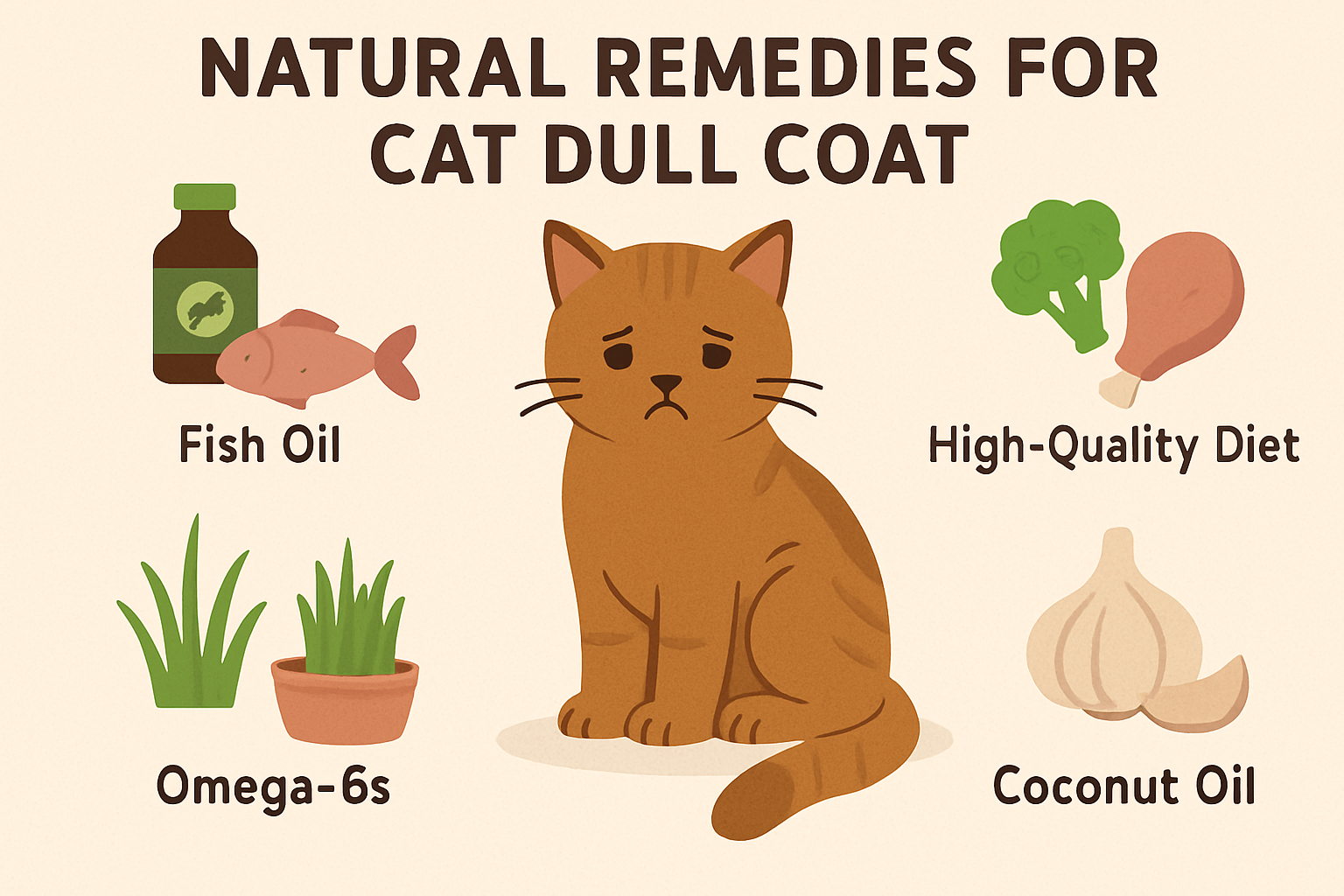
A dull coat usually means your cat needs better nutrition, gentler grooming, or just some natural treatments you can try at home.
Most of the time, you’ll see improvement with diet tweaks, omega-rich oils or supplements, and some careful grooming—often without needing medication.
This post digs into why a dull coat happens, which natural oils and foods actually help, and how a few changes at home can really boost your cat’s fur and comfort.
Check out the practical tips and safe DIY remedies to start bringing back that healthy, glossy coat.
Understanding Dull Coat in Cats
A dull coat can mean something simple—like lazy grooming—or something bigger, like a nutrition problem or illness.
Let’s get into what usually causes a lackluster coat, how you can spot the real signs of poor skin and coat health, and when it’s time to call your vet.
Common Causes of Dull Coat
Usually, poor diet tops the list. If your cat’s food is missing good animal protein or essential fatty acids (Omega‑3 and Omega‑6), the hair gets brittle and loses shine.
Low levels of vitamins A, E, B7 (biotin), or minerals like zinc can also mess with hair growth and skin repair.
Parasites and skin infections can wreck a coat fast. Fleas, mites, and fungal infections bring itching, scabs, and hair loss.
Chronic stress changes hormones and makes cats groom less, so oils and dead hair build up and dull the fur.
Age and medical stuff matter too. Older cats or those with kidney disease, hyperthyroidism, or diabetes often show coat changes.
Overgrooming from allergies or pain can leave patchy, scruffy fur.
Recognizing Signs of Poor Coat Health
Don’t just look for shine. Check for broken hairs, thinning patches, or clumps that come out easily.
These could mean weak follicles or overgrooming.
Peek at the skin under the fur. Redness, flaking, sores, scabs, or oily spots might point to infection, parasites, or dermatitis.
A bad odor often means bacteria or yeast are getting out of hand.
Pay attention to behavior and body changes. Excessive scratching, licking, weight loss, thirst, or low energy often go hand-in-hand with coat problems—and could mean something more than just a cosmetic issue.
Here’s a quick checklist:
- Coat: brittle, dry, greasy, or matted?
- Skin: flaky, red, scabby, or normal?
- Grooming: normal, too much, or not enough?
When to Seek Veterinary Advice
Call your vet if the dullness lasts more than a week or you see skin lesions, bald spots, or bleeding.
These signs often need tests like skin scrapings, bloodwork, or parasite checks.
If your cat’s losing weight, drinking more, vomiting, has diarrhea, or suddenly acts different, get help soon.
Those symptoms can mean metabolic problems (kidney, diabetes, thyroid) that affect coat quality.
Bring photos and notes about food, grooming, and when you noticed changes.
This helps your vet figure things out faster and recommend the right tests or treatments.
Nutrition’s Role in Revitalizing Cat Coat
Good nutrition gives your cat what they need for healthy skin and a shiny coat.
You’ll want to feed the right proteins, fats, vitamins, and keep water in the mix to fix dull fur and cut down flaking.
Essential Nutrients for Fur Health
Protein builds fur. Pick foods where meat or fish comes first.
Aim for 30–40% protein in adult cat diets (if your vet agrees), since amino acids like cysteine and methionine keep hair strong.
Omega-3 and omega-6 fatty acids keep skin calm and add shine. Look for EPA/DHA from fish oil and linoleic acid from poultry or plant oils.
A small daily dose of fish oil (check the label or ask your vet) often makes fur softer and reduces shedding.
Vitamins and minerals matter, too. Vitamin A, E, zinc, and biotin help with skin repair and new hair.
Don’t overdo supplements—too much vitamin A or others can actually hurt your cat. Always check with your vet before adding anything.
Balanced Diets for a Glossy Coat
Pick a complete cat food labeled for all life stages or for your cat’s age and health.
“Complete” means it meets the AAFCO profile or similar standards, so your cat gets the protein, fat, vitamins, and minerals needed for a good coat.
Try rotating protein sources now and then to avoid food sensitivities that show up as dull or patchy fur.
If allergies or parasites are the problem, your vet might suggest a hypoallergenic or novel-protein diet.
Going homemade? Definitely work with a veterinary nutritionist.
You’ll need the right calcium-to-phosphorus ratios, essential fatty acids, and vitamins. Skipping these in homemade meals causes more coat problems than most commercial foods.
Benefits of Proper Hydration
Hydration keeps skin cells happy and fur flexible.
Offer fresh water in a few bowls or try a cat fountain to encourage drinking.
Wet food helps with daily water needs—especially for cats that don’t drink much.
Dehydrated skin gets flaky and dull. If your cat isn’t drinking enough, switch some meals to canned food or add a bit of low-sodium broth to dry kibble.
Check urine color and skin elasticity as simple tests. If skin tents or urine’s super dark, call your vet—dehydration can make skin and coat issues worse and might mean something’s up medically.
Natural Oils and Supplements for Enhanced Fur Quality
Natural oils can help reduce dryness and add shine—either applied or given in food.
Supplements like fish oil deliver fatty acids that support skin and fur texture.
Topical Oils for Softness and Shine
Use a tiny amount of light, non-irritating oils so you don’t make the fur greasy or cause skin reactions.
Jojoba, argan, and rosehip are all good picks. Jojoba feels like natural skin oil and soaks in quickly.
Argan adds shine without feeling heavy. Rosehip hydrates and might help minor skin healing.
Rub a pea-sized amount between your fingers and gently massage it into dry spots or the ends of long fur.
Always test a small patch first. If your cat licks a lot or shows redness, stop.
Skip concentrated neem or undiluted essential oils. Always dilute strong oils with a gentle carrier, and don’t let your cat eat large amounts.
Tips:
- Once a week is enough for light conditioning.
- Just a dab per use.
- Avoid eyes, nose, and open wounds.
Omega Fatty Acids and Skin Support
Omega-3 and omega-6 fatty acids help skin stay hydrated and less inflamed.
Fish oil (like salmon or sardine) gives EPA and DHA, which often boost coat softness and cut down flakiness.
Plant oils like hemp seed offer a balanced omega-3/omega-6 mix for general skin health.
Mix these oils into food, using the dose on the bottle for your cat’s weight.
Watch for changes in stool. Store fish oil in the fridge so it doesn’t go rancid.
If your cat has allergies or a health issue, check with your vet before starting supplements.
Quick checklist:
- Pick vet-approved, cat-safe products.
- Dose by weight.
- Watch for changes in skin, coat, and stool.
Gentle Grooming Techniques and Tools
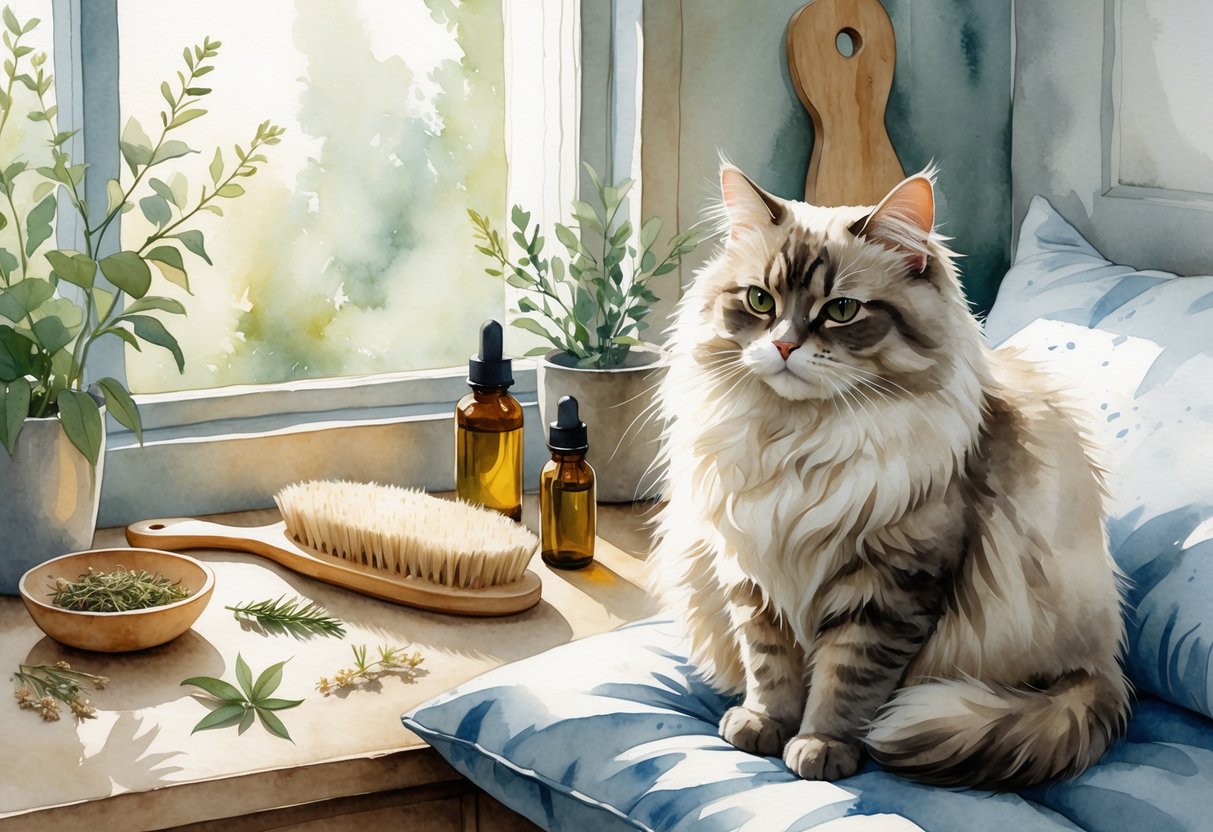
Let’s talk brushing, picking the right brushes, and bathing your cat with gentle shampoos.
These steps help cut tangles, remove loose hair, and protect skin oils for a healthier coat.
Proper Brushing Methods
Brush your cat 2–3 times a week; long-haired cats may need daily sessions.
Keep sessions short and calm—3–5 minutes to start, then longer if your cat’s into it.
Hold the skin gently with one hand to avoid pulling, and brush in the direction the fur grows.
Go slow and steady, focusing on tough spots: chest, behind the ears, and around the tail.
For mats, hold the base of the fur near the skin, gently tease apart with your fingers, then try a dematting comb.
If your cat gets upset, stop and try later.
Give treats or extra petting after brushing.
Check the skin for redness, flakes, or bugs each time.
Regular brushing really does help control shedding and spreads natural oils for shine.
Choosing the Right Grooming Tools
Match your brush to your cat’s coat.
Use a slicker brush or wide-tooth comb for long, thick coats.
Short-haired cats usually do well with a rubber grooming mitt or bristle brush to lift loose hair and get oils moving.
Look for:
- Rounded brush tips (no scratches, please).
- Comb teeth spaced for your cat’s fur.
- Easy-to-clean tools.
Keep a dematting tool and blunt scissors for tough tangles—but use scissors only if you’re steady-handed.
Replace worn brushes—blunt tips can scratch. Clean tools after each use to keep them fresh.
Bathing Guidelines and Shampoo Selection
Only bathe your cat if you really need to—oily coat, heavy dirt, or if your vet says so.
Use lukewarm water and a shallow tub or sink.
Towels nearby help, and a quiet room keeps stress down.
Pick a shampoo made for cats, with no harsh detergents or heavy scents.
Look for gentle surfactants and conditioners. Don’t use dog shampoo unless your vet okays it.
Use a small amount, lather gently, and rinse well to get rid of all residue.
Blot dry with towels, and if your cat tolerates it, use a low-heat blow dryer at a distance.
Never let wet fur air-dry in the cold.
Treats and calm words go a long way during bath time.
DIY Natural Remedies for Healthier Cat Skin and Coat
These easy remedies focus on moisturizing, calming itch, and adding shine using safe household ingredients and gentle herbs.
Use them along with good grooming and a balanced diet to help your cat’s skin and coat.
Homemade Conditioning Treatments
Make a quick conditioner with plain coconut oil for shine and dry patches.
Warm a teaspoon until it’s liquid, rub a few drops into your palms, and gently stroke it through short fur or just the ends of long fur.
Avoid the skin if your cat licks a lot—use it sparingly so the fur doesn’t get greasy.
For a rinse-in conditioner, mix 1 tablespoon olive oil with 1 cup warm water.
After a mild cat shampoo, pour the mix over your cat’s coat, rub gently, then towel-dry.
This helps with tangles and smooths fur. Always test a small area first, and skip human conditioners with scents or detergents.
Herbal and Oatmeal Remedies
Oatmeal soothes dry, itchy skin.
Grind 1 cup plain oats into powder, mix with warm water to make a paste, and apply gently to irritated spots for 5–10 minutes.
Rinse well with warm water.
You can make an oatmeal soak by tying the powder in a cloth and running it under the faucet into a shallow bath.
Chamomile or calendula tea works as a gentle anti-inflammatory rinse.
Brew a strong tea, let it cool, and dab it onto red or flaky spots with a soft cloth.
These herbs calm irritation without chemicals.
If your cat’s allergic to plants, skip this—and always stop if the skin gets worse.
Soothing Rinses and Relief for Irritation
Grab some cooled, pure aloe vera gel (skip anything with additives) to soothe minor dry spots and hot spots. Just dab a thin layer on the trouble spot.
Don’t use gels with alcohol or perfumes—those only make things worse. If your cat starts licking at it, wipe it off quickly and maybe check with your vet if the licking doesn’t stop.
For dandruff or if your cat’s just got dry skin, try adding a fish oil supplement to meals, but always double-check the dose with your vet first. Omega-3s in these supplements can boost skin moisture.
If your cat’s itching and needs quick relief, mix equal parts distilled water and white vinegar for a fast rinse—just test a tiny patch first. Never use this on open wounds.
Environmental and Lifestyle Factors Affecting Coat Quality
The air in your home and your daily habits can really change your cat’s skin and coat. Even little tweaks—like humidity, water, grooming, or stress—sometimes do more than fancy products ever will.
Humidity and Hydration Strategies
Dry air in the house sucks the moisture right out of your cat’s skin, leaving fur looking tired. Try running a humidifier set between 40–50% in the rooms your cat loves most, especially if you’re blasting the heat in winter.
Stick a hygrometer by your cat’s favorite nap spot so you can keep an eye on things.
Cats don’t always drink enough, so put out a few water bowls on different floors or get a pet fountain—some cats go wild for those. Got a cat who only eats kibble? Mix in a little canned food or a splash of warm water to help them stay hydrated.
Topical tricks can help, but don’t go overboard. Use a moisturizing shampoo (vet-approved, of course) just once a month, tops. Rub in a bit of coconut or olive oil on dry spots, but only after you’ve cleared it with your vet.
Skip the urge to bathe too often. Too many baths just strip away those natural oils and actually make fur look worse.
Reducing Stress and Promoting Well-being
Stress can make cats overgroom or skip grooming altogether, which wrecks their coat. Set up consistent routines for feeding and playtime to reduce anxiety.
Keep litter boxes, food bowls, and cozy resting spots in the same, familiar places. Cats really notice when you move things around, and honestly, who doesn’t prefer predictability?
Add vertical space and hiding spots with cat trees and shelves. These little nooks help your cat feel safe and in control.
Try interactive play for 10–15 minutes twice a day. It’s not just fun—playtime eases tension and gets the blood flowing to their skin.
If you’ve got more than one cat, keep an eye out for bullying. Give each cat their own food, water, and litter box to cut down on stress.
If your cat seems stressed all the time—think constant licking, hair loss, or not eating—maybe try pheromone diffusers or talk to your vet about an anti-anxiety plan.
