

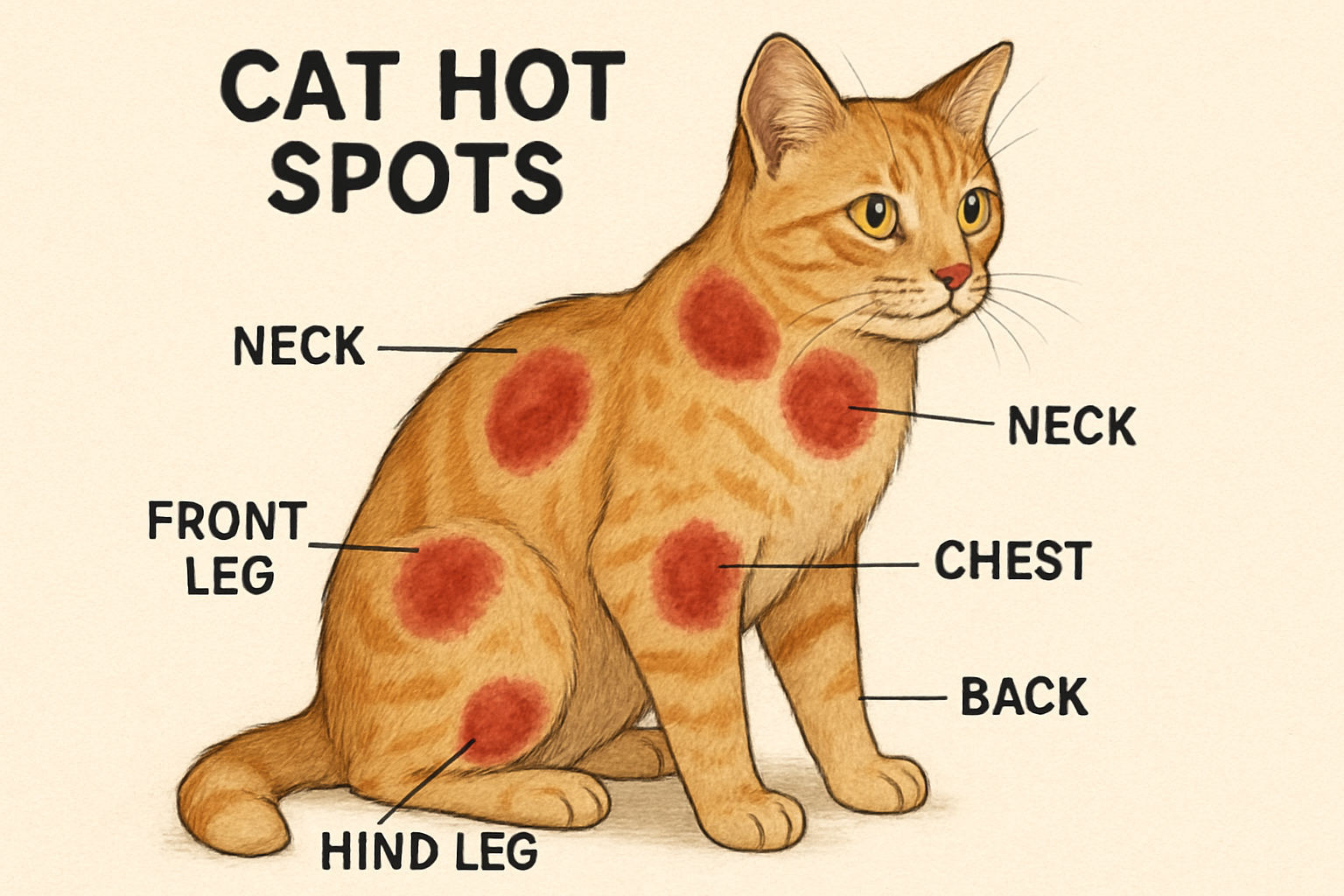
Hot spots hurt your cat and feel urgent to fix. You can try gentle, vet-safe DIY steps at home—like cleaning, soothing with plain solutions, and protecting the area—while watching closely for signs that need professional care.
This post shows which simple remedies can help, when to stop and call a vet, and how to avoid making the problem worse.
You’ll learn what causes hot spots, which home treatments are safe, and how to protect the area so it heals.
Follow practical tips for immediate comfort and longer-term skin health so you can act confidently and keep your cat calm.
Understanding Hot Spots in Cats
Hot spots are painful, red, moist skin lesions that often start from licking or scratching. Look for sudden, raw patches, usually with hair loss, that can spread quickly if you don’t act.
What Are Hot Spots (Acute Moist Dermatitis)
Hot spots, also called acute moist dermatitis, are local skin infections caused when your cat repeatedly licks, chews, or scratches one area. The constant irritation breaks the skin barrier, allowing bacteria to grow and the area to become wet, red, and painful.
Common triggers include fleas, food or environmental allergies, insect bites, or stress-related overgrooming. Short-coated or damp fur makes the problem worse because moisture gets trapped against the skin.
Hot spots can enlarge in hours, so you should check the area quickly and keep it clean while you decide next steps.
Key Symptoms of Hot Spots
Look for a sudden, circular or irregular sore that appears quickly. The skin will be bright red, moist, and often warm to the touch.
Your cat may lick or bite the spot constantly and may seem more irritable or hide more than usual. You might notice a foul smell, discharge, or scabbing as the lesion progresses.
Fever is uncommon but possible with a deep infection, so watch for lethargy or loss of appetite. If symptoms worsen in 24–48 hours, contact your veterinarian.
Recognizing Open Sores, Hair Loss, and Matted Fur
Open sores start as small irritated spots and can become raw, oozing wounds when your cat keeps licking. The center often has missing fur and exposed, inflamed skin.
Hair loss appears around the sore and along any area your cat overgrooms. Fur near the lesion can become matted with saliva, pus, or dried blood.
Matted fur holds moisture and bacteria against the skin, which fuels the hot spot. Gently part the fur to inspect the skin; if you see deep crusts, heavy discharge, or spreading redness, seek veterinary care.
Primary Causes and Triggers
You need to know what causes hot spots so you can stop them quickly. Most start with an itch, skin damage, or trapped moisture that lets bacteria grow.
Allergies and Flea Bites
Allergies often start the cycle that leads to hot spots. Food allergies, pollen, dust mites, or flea saliva can make your cat itch intensely.
A single flea bite can trigger a severe reaction in sensitive cats, causing nonstop scratching. When your cat scratches or chews, the skin breaks and bacteria overgrow.
That creates a red, wet, painful patch that worsens fast. Watch for sudden, focused hair loss, repeated scratching in one area, and small scabs or bumps near the base of the tail, neck, or behind the ears.
Treating the allergy source helps prevent repeat hot spots. Use vet-recommended flea control, try elimination diets under vet guidance, and reduce pollen exposure by keeping windows closed during high pollen times.
Poor Grooming and Matted Fur
Long or dense coats can trap dirt, oils, and moisture next to the skin. If you don’t brush regularly, hair mats form and press on the skin.
Mats block air flow and trap bacteria, which raises the risk of hot spots. Matted fur also makes it hard for your cat to groom properly.
Your cat may overgroom some spots to compensate, causing skin breaks. Check hidden areas—behind the legs, under the belly, and around the collar—for clumps and tangles.
Keep a regular grooming routine based on your cat’s coat type. Use a wide-tooth comb for mats and seek professional grooming for severe tangles to avoid cutting or injuring the skin.
Excessive Scratching and Licking
When your cat scratches or licks a spot too much, the skin barrier breaks down quickly. Continuous saliva wetness and trauma let bacteria and yeast multiply.
That turns a simple itch into a moist, inflamed hot spot. Stress, boredom, or pain can make your cat overgroom.
Ill-fitting collars, flea bites, or changing routines are common triggers. Monitor behavior changes: if your cat focuses on one area, distract with toys or temporary protective clothing while you address the cause.
Use short-term measures—an Elizabethan collar or vet-approved topical treatments—only as directed. Stopping the chewing and licking is essential so any topical remedy can work and the skin can heal.
Underlying Skin Conditions
Other skin problems can set the stage for hot spots. Bacterial or fungal infections, mites, seborrhea, and hormonal imbalances can cause chronic itch or poor skin health.
These conditions often need veterinary diagnosis and targeted treatment. If your cat has recurring hot spots, tests like skin scrapings, fungal cultures, or blood work can reveal the root cause.
Treating only the hot spot without addressing the underlying disease leads to repeat flare-ups. Keep a log of when hot spots appear and any changes in diet, environment, or grooming to help the vet diagnose the issue.
DIY Remedies for Cat Hot Spots
You can treat mild hot spots at home if you act fast and stay gentle. Focus on cleaning, trimming fur, safe topicals, and cool compresses to reduce infection and soothe skin.
Cleaning and Trimming the Affected Area
Start by washing your hands and keeping your cat calm. Clip nearby fur with blunt-tipped scissors or clippers so you can see the wound.
Gently clean the area with a saline solution (1 tsp salt in 1 cup warm boiled-and-cooled water). Use sterile gauze or a clean cloth to dab—don’t rub.
Pat dry with a soft towel. If there is pus, heavy odor, or deep tissue damage, stop home care and see a vet.
For small, shallow lesions, clean once or twice daily. Keep nails trimmed on your cat and use an Elizabethan collar if they keep licking.
Safe Topical Applications
Use only cat-safe products and avoid essential oils, alcohol, or hydrogen peroxide on open skin. Apply a thin layer of pure aloe vera gel (ensure it’s only the inner gel, no additives) to soothe inflammation and reduce itch.
You can also use a small amount of raw honey for its mild antibacterial properties, but protect the area so your cat doesn’t ingest large amounts. Over-the-counter veterinary antiseptic sprays with silver or chlorhexidine are safer choices if you have them.
Always patch-test a tiny area first and watch for vomiting or increased irritation. If the spot worsens or your cat licks off the product repeatedly, stop use and consult your vet.
Natural Soothing Compresses
Make a chamomile or green tea compress to calm redness. Steep one tea bag in hot water, cool completely, then soak sterile gauze and apply for 5–10 minutes.
Repeat up to three times daily. An oatmeal rinse also helps dry, flaky skin.
Grind plain oats into a powder and mix with warm water to a thin paste. Apply briefly, then rinse—don’t leave paste where the cat can lick it.
Avoid acidic rinses like undiluted apple cider vinegar on raw skin; if you use diluted vinegar (1 part ACV to 3 parts water), do not apply to open wounds. Monitor the spot: if swelling, spreading, or smell appears, stop home treatments and see your vet.
Popular Natural Home Treatments
These remedies aim to soothe inflammation, reduce bacteria, and keep your cat from licking the area. Use them only for mild cases, avoid open wounds, and stop if your cat worsens.
Coconut Oil and Aloe Vera Gel
Coconut oil can help moisturize dry skin and may have mild antibacterial effects. Use virgin, unrefined coconut oil and apply a very thin layer to the hot spot; too much oil will attract dirt and encourage licking.
Limit contact time and monitor your cat—if they lick a small amount it’s usually not dangerous, but heavy ingestion can cause stomach upset. Pure aloe vera gel (not the whole leaf or products with additives) soothes irritation and reduces redness.
Patch-test a small area first. If you use a homemade mix, blend 1 part pure aloe vera gel with 1/4 part coconut oil to make a light balm.
Apply gently and only once or twice daily. Never use aloe products that contain latex or alcohol, and stop use if the skin gets wetter or more inflamed.
Diluted Apple Cider Vinegar Application
Apple cider vinegar (ACV) can change surface pH and may discourage bacterial growth when used carefully. Always dilute ACV with water at a 1:3 ratio (one part ACV to three parts distilled water).
Do not apply to raw, bleeding, or oozing skin—vinegar will sting and delay healing. Use a cotton ball to lightly dab around the edge of the hot spot, not directly into the sore.
Apply once daily and watch for signs of stinging, increased redness, or repeated licking. If your cat grooms the area excessively after application, discontinue use.
Keep ACV away from your cat’s eyes and mucous membranes.
Chamomile and Herbal Rinses
Chamomile tea and certain mild herbal rinses can calm inflamed skin and reduce itch. Brew a strong chamomile tea, let it cool to room temperature, and strain thoroughly.
Use the cooled tea as a compress: soak a clean cloth and press gently against the hot spot for several minutes. Ensure any herbal rinse is caffeine-free and free of essential oils or additives.
Apply the rinse once or twice daily. If you bathe your cat with an oatmeal or gentle herbal shampoo, rinse well to remove residue and follow with pat-drying.
Stop herbal rinses if the area becomes more irritated or your cat shows signs of allergic reaction.
Protective Measures to Support Healing
Use physical barriers and gentle coverings to stop licking, scratching, and dirt from reaching the hot spot. Choose the right device, keep it clean, and check your cat’s skin daily for signs of improvement or irritation.
Using an Elizabethan Collar (E-Collar)
An Elizabethan collar (E-collar) keeps your cat from reaching the wound with its mouth. Pick one that fits snugly—if you can slip two fingers between the collar and your cat’s neck, you’re good.
Soft fabric collars let cats move and eat a bit easier. Rigid plastic collars, though, offer stronger protection for tougher or awkward spots.
Trim and adjust the collar so your cat can still get to food and water. Make sure the rim doesn’t block the bowl.
Check the collar’s edges every day for any rubbing or sore spots. Clean it once a week with mild soap and water so it doesn’t get gross.
If your cat seems super stressed or still manages to reach the wound, try a different size or style.
Recovery Suits and Barriers
Recovery suits cover the body and keep hot spots safe from licking and dirt. Choose one that covers the right area but doesn’t press on the wound.
Look for breathable fabric and closures that stay put, even if your cat is squirmy. Measure your cat’s chest and length, and stick to the brand’s sizing chart.
Put the suit on gently and watch your cat for about 10–15 minutes—just to make sure it moves okay. If your vet says it’s fine, take the suit off for short, supervised breaks so the skin can breathe.
Wash the suit after each use. Check for loose threads or seams that might bug your cat’s skin.
Preventing Re-Injury and Overgrooming
Treat the root causes—fleas, allergies, or stress—to stop the licking cycle. Use flea control as your vet recommends.
If you think food allergies are the culprit, try switching to hypoallergenic food. Reduce stress with quiet spots, regular play, and hiding places.
Give your cat chew toys or puzzle feeders to keep it distracted from grooming. If your vet says so, trim the fur around the area to keep it dry.
Check the wound twice a day for swelling, pus, or more redness. If you see any of those, call your vet right away.
Essential Prevention and Long-Term Skin Health
Keep your cat’s skin in good shape with steady grooming, solid flea control, a balanced diet, and by keeping an eye on any weird spots.
Regular Grooming Practices
If your cat has medium or long fur, brush it at least three times a week. Short-haired cats usually do fine with a weekly brushing.
Use a slicker brush for mats, and a rubber mitt to grab loose hair without scratching up the skin. While you’re at it, check for redness, scabs, or damp spots.
Cut out mats gently, or let a groomer handle the tough ones. Mats trap moisture and rub, which can spark hot spots.
Clean ears and eyes with vet-approved wipes to keep irritation away. Snap a photo and jot down the date if you spot new sores—tracking healing is underrated.
Flea Prevention and Environmental Control
Use a vet-approved flea product every month—spot-ons or oral tablets work. Treat every pet in the house at the same time to stop fleas from bouncing back.
Wash bedding in hot water every week to kill flea eggs and larvae. During an outbreak, vacuum carpets, furniture, and even your car twice a week.
Dump vacuum bags or empty canisters outside so fleas don’t crawl back in. After your cat’s been outside, run a flea comb through its fur just to be sure.
If fleas won’t quit, ask your vet about sprays or maybe even professional pest control.
Balanced Diet and Immune Support
Feed high-quality cat food with real animal protein—think chicken or salmon—and omega-3s to help with skin inflammation. If your cat’s coat looks dull or flaky, or if it’s scratching a lot, ask your vet about fish oil supplements and follow their directions.
If you suspect food allergies, try a limited-ingredient or hypoallergenic diet for the full 8–12 weeks. Only add probiotics if your vet gives the green light.
Always keep fresh water out so your cat’s skin stays hydrated.
Monitoring Healing Time and Relapse
Jot down the date when you first notice a hot spot. Snap a clear photo every couple of days so you can actually see how things change.
Mild hot spots usually start to look better within a week if you stay on top of care. But if the sore runs deep or looks infected, you might be in for a longer haul—sometimes two to four weeks or more, and that’s when a vet really needs to step in.
If you see the area getting bigger, it starts to smell, or your cat seems tired or feverish, don’t wait—call your vet right away.
Even after things heal up, keep grooming, stay on top of flea control, and tweak their diet if you need to. It’s the best way to keep those hot spots from coming back.
