

Teething makes kittens cranky and bitey, but you can help at home with safe, simple tools and toys. Try chilled washcloths, sturdy cardboard, and soft chew toys to soothe sore gums and redirect biting—just supervise play and choose non-toxic, durable stuff.
This article covers how to make and pick DIY teething items that actually help.
You’ll get why homemade options work, which materials to skip, easy toy ideas you can make from stuff around the house, and quick cleaning and safety tips. If something looks off, there’s advice on when to call your vet.
Understanding Cat Teething Discomfort
Teething brings sore gums, extra chewing, and changes in eating or play. You’ll spot swollen gums, drooling, and firmer bites as baby teeth fall out and adult teeth come in.
What Happens During Kitten Teething
Your kitten loses 26 baby teeth and grows 30 adult teeth. Incisors, canines, and premolars fall out first, then adult teeth push through.
Gums get red, tender, and a little swollen. Chewing helps new teeth break through, so kittens bite more and mouth everything.
Gentle pressure from chewing eases soreness, but if you don’t give safe options, they’ll go for anything. Soft but textured toys work best.
Rotate toys so your kitten always has something safe. Watch for bleeding or a tooth that’s stuck—those mean a vet visit.
When Do Kittens Start Teething?
Most kittens start teething around 3–6 weeks for baby teeth. The real action—losing baby teeth and getting adult ones—runs from about 3 to 6 months.
By 6 months, almost all kittens have their adult teeth. Timing can shift if your kitten’s breed or health is unusual.
If baby teeth linger after six months or your kitten seems miserable, call your vet to check for retained teeth or infection.
Kitten Teething Symptoms
Swollen, tender gums—sometimes pink or a bit red—are common. Kittens may drool, chew hard on toys (or your fingers), and prefer soft food for a while.
You might spot tiny blood spots on toys or in the mouth after chewing. Appetite can dip, but if they refuse food for more than a day, that’s not normal.
They might rub their face or paw at their mouth more. Try chilled washcloths or soft chew toys for relief.
Watch for changes in chewing and toss toys that fray or shed bits.
Recognizing Teething vs. Other Health Issues
Teething looks a lot like dental disease or mouth injuries, so compare symptoms. Teething usually means mild drooling, a bit of bleeding, and short-term fussiness.
Bad breath, swollen lymph nodes, fever, or heavy bleeding point to infection or something else. If your kitten paws at the mouth constantly, won’t eat for a day, or you see pus, call your vet.
If adult teeth look crooked or baby teeth don’t fall out, you’ll want a vet’s help since retained teeth can trap food and cause problems.
Jot down symptoms—date, eating, drooling, bleeding—to help your vet figure things out faster.
Why DIY Solutions Are Effective for Teething Relief
DIY toys let you pick safe, soft materials, control size and texture, and offer cold or flavored stuff for sore gums. You can match toys to your kitten’s chewing style and swap them out to keep things fresh.
Benefits of Homemade Teething Toys
You can braid a cloth rope, stuff a sock, or chill a washcloth to fit your kitten’s bite. Soft cotton or fleece cushions gums, while braided or woven textures give just enough resistance to help loosen baby teeth.
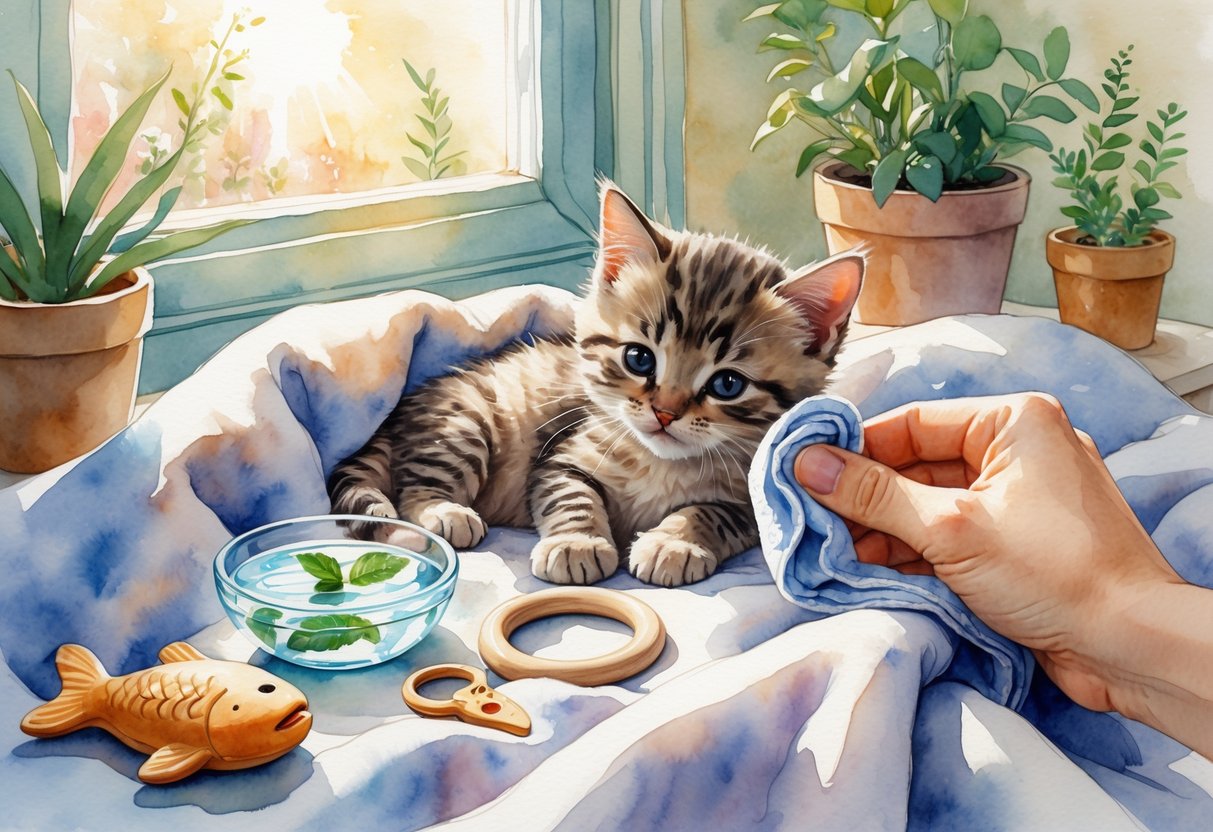
Chilled items—like a wet washcloth from the fridge—ease inflammation and offer quick relief. Homemade toys cost next to nothing, and you can wash or replace them easily.
You control the size, so nothing gets swallowed, and you can tweak weight or shape for kittens who like to carry toys.
Safety Considerations for DIY Toys
Stick with non-toxic, unpainted fabrics and skip small stuff like buttons or beads. Secure seams and knots so stuffing or threads don’t escape.
If a toy gets holes or frays, toss it right away. Keep metal, glue, and sharp stuff far from anything your kitten chews.
Watch how your kitten plays with new toys—some go wild. Wash fabric toys often and throw out anything that smells or can’t get clean.
Encouraging Healthy Chewing Habits
Give your kitten a toy when you catch them chewing hands, cords, or furniture. Redirect right away: pop the teething toy in their mouth and praise or give a tiny treat when they use it.
Mix up homemade options—braided ropes, felt mice, chilled cloths—so they don’t get bored. During play, if your kitten bites too hard, stop for a bit so they learn gentle play gets attention.
Consistent redirection and safe DIY toys really help kittens figure out what’s okay to chew.
DIY Teething Toys: Ideas and Instructions
These simple toys soothe sore gums, redirect biting, and use stuff you already have around. Here’s what you’ll need, how to make them, and how to offer them to your kitten.
Braided Fabric Chew Toy
Soft, tightly braided fabric gives your kitten something tough but gentle to chew.
Materials:
- 3 strips of clean cotton fabric (old t-shirt or washcloth), about 1.5–2 inches wide and 12–18 inches long
- Scissors
- Needle and thread or just a tight knot
Steps:
- Wash and dry the fabric.
- Tie a knot at one end of the three strips.
- Braid tightly toward the other end, then tie another knot.
- Trim loose threads.
Safety tips:
- Check the braid often for loose threads or holes.
- Make it thicker for strong chewers or double the strips.
- Skip fabric with elastic, metal, or glued stuff.
How to offer:
- Dangle it for tugging or leave it on the floor for solo chewing.
- Replace after heavy wear.
Chilled and Frozen Washcloths
Cold numbs gums fast. Use only clean, natural fabric—no chemicals.
Materials:
- Small, clean cotton washcloths
- Water or a little low-sodium chicken broth (if you want)
- Freezer bag or container
Steps:
- Soak the washcloth in water or diluted broth.
- Wring out extra liquid for a softer chew, or leave it wetter for a firmer freeze.
- Fold and seal in a bag or container.
- Freeze until solid or just chilled.
Safety tips:
- Always supervise—melting fabric can be a choking risk.
- Use a mat to catch drips.
- Thaw and wash between uses.
How to offer:
- Put the frozen cloth on the floor for 5–10 minutes.
- Use chilled (not rock-hard) for smaller kittens.
Cardboard Boxes and Rolls
Cardboard is great for chewing and hiding. Use plain, clean stuff—no coatings or staples.
Materials:
- Empty toilet-paper or paper-towel rolls
- Small cardboard boxes (no staples or tape)
- Scissors
For rolls:
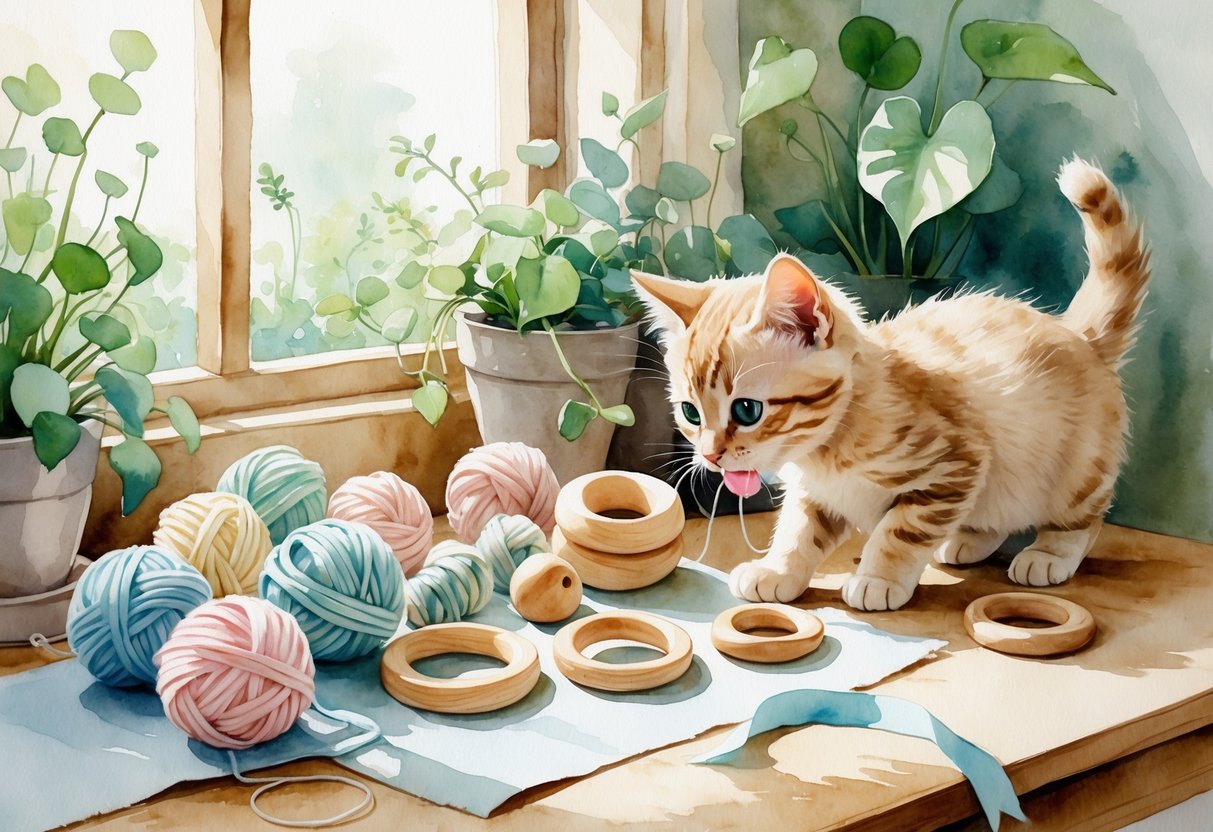
- Cut into 1–2 inch rings or leave whole.
- Thread a thick ribbon through and tie outside kitten’s reach if you want.
For boxes:
- Remove plastic, staples, or tape.
- Cut entry holes or leave as is.
Safety tips:
- Pick up small bits and toss shredded pieces.
- Avoid glossy or printed cardboard.
- Supervise so nothing gets swallowed.
How to offer:
- Scatter rolls for batting or hide treats in a box to encourage chewing.
Stuffed Sock and Catnip Pouches
Stuffed socks and little pouches offer texture and scent to distract from chewing furniture.
Materials:
- Clean sock or small pouch
- Filling: crumpled paper, fabric scraps, or a pinch of catnip
- Needle and thread or just a knot
For sock toy:
- Stuff the toe of a clean sock and add a bit of catnip if your kitten likes it.
- Tie a knot or sew the end shut.
For catnip pouch:
- Put catnip in the middle of a small fabric square, fold, and sew or tie.
- Reinforce seams to prevent spills.
Safety tips:
- Don’t use small bits that could be swallowed.
- Limit catnip for kittens that get too wild.
- Replace if stuffing escapes.
How to offer:
- Toss for chasing or leave near beds for private chewing.
Selecting the Best Materials for Homemade Teething Toys
Pick materials that hold up to chewing, clean easily, and don’t break into little pieces. Go for soft, chew-safe fabrics and sturdy household items that don’t soak, tear, or shed.
Safe Fabrics and Household Items
Tightly woven cotton, denim scraps, and untreated flannel make great DIY teething toys. These resist fraying and you can sew them into sturdy shapes.
Double or triple the layers and reinforce seams to stop tearing. Braided cotton rope or thin leather strips add texture without sharp edges.
Stuff toys with polyester fill sewn into an inner pouch, not loose, so kittens can’t pull it out. For cooling, sew a pocket for a frozen gel pack or ice cube (sealed in plastic).
Machine wash fabric toys on warm and air dry. Replace if seams open, fabric thins, or they start to smell. Label toys for teething only and skip buttons, bells, or glued extras.
Materials to Avoid in Teething Toys
Skip soft plastics, vinyl, and silicone unless they’re food-safe—they can break and leave sharp bits. Don’t use thin felt, loose yarn, or fabrics that pill—they shed fibers kittens might swallow.
No beads, buttons, snaps, or glued decorations. Anything under about 1 inch (2.5 cm) could choke a kitten if it comes loose.
Don’t use treated wood, painted or varnished stuff, or anything with strong scents or oils. Avoid rawhide, toys with hidden knots, or anything that swells when wet.
If you see chew marks, sharp edges, or swelling, toss the toy right away.
Practical Tips for Soothing Kitten Teething Discomfort
You’ll probably notice sore, swollen gums, a little extra drool, and maybe some crankiness as your kitten’s teeth come in. To help, stick with safe toys and keep things predictable.
Try cold items, gentle checks, and short, supervised play to ease pain and keep your stuff safe.
Recognizing and Managing Swollen Gums
Swollen gums usually look red, puffy, or shiny where teeth are pushing through. Gently peek in your kitten’s mouth once a day—don’t make a big production out of it.
If you spot bleeding, pus, or a stubborn loose tooth, call your vet. For home comfort, offer a clean, chilled washcloth or a soft rubber chew toy.
Pop a damp washcloth in the freezer for about 10–15 minutes, but don’t let it freeze solid. Hold a cold item to the outside of the mouth for a minute or so to help with swelling.
Skip human pain meds—they’re dangerous for cats. If swelling lasts over 48 hours or your kitten stops eating, get your vet involved.
They’ll check for infection, leftover baby teeth, or other dental issues.
Handling Excessive Drooling and Mess
Teething kittens drool more than usual, but it’s not always just teething. Wipe your kitten’s chin and chest with a soft cloth a few times a day to keep the fur tidy.
Change bedding more often if things get damp or smelly. If you notice bad breath, pawing at the mouth, or refusal to eat, it’s time to call the vet.
For mild drooling, try wet food or moisten dry kibble so chewing is easier. Put a towel or shallow mat under food bowls—makes cleanup way faster.
Don’t pry your kitten’s mouth open for long checks. Keep it quick and gentle.
Watch water intake; teething kittens can get dehydrated if they drool a lot, so offer small, frequent drinks.
Keeping Kittens Engaged and Comfortable
Give your kitten soft chew toys, braided fabric, and chilled cloths to gnaw on. Rotate three or four toys every day to keep things interesting.
Chill one toy before play to give immediate gum relief. Keep play sessions short—five to ten minutes at a time, a few times a day.
This helps distract them from chewing furniture or cords. Reward good chewing with treats or some praise to build good habits.
Always supervise play with homemade toys and toss any with loose threads or stuffing. Set up a calm space with a warm bed and a quiet corner.
Sore kittens might just want to nap more—let them. If you notice sudden changes like aggression, nonstop crying, or no appetite, give your vet a call.
When to Consult a Veterinarian
Keep an eye out for anything that seems way beyond normal teething drama. If your kitten seems in serious pain, won’t eat, or has bleeding, reach out to a vet soon.
Signs of Serious Teething Problems
Continuous gum bleeding or pawing at the mouth for more than a day? That’s a big red flag.
If your kitten refuses food for a day or more, especially if they’re losing weight or look weak, don’t wait.
Watch for heavy drooling with yellow or green goop, swelling in the face, or a broken tooth. These might mean infection or a fractured tooth that needs help.
Also, fever, tiredness, or stubborn bad breath are warning signs. If you see choking, gagging, or trouble breathing, get emergency help.
Jot down what you notice—symptoms, timing, and any toys or stuff your kitten chewed—before you call.
When to See a Vet During Teething
Call your vet if home remedies don’t help after about 48 hours. If your kitten’s behavior gets worse, that’s another sign it’s time to reach out.
When you call, mention any changes in eating, playfulness, or even stool and urine habits. These details help your vet get the full picture.
Bring your kitten in if you spot loose permanent teeth or teeth that just aren’t coming in when they should. Swelling or tenderness on one side of the jaw is also worth a trip to the clinic.
Your vet will probably want to check for things like retained baby teeth, a misaligned bite, or signs of infection in the mouth. Sometimes, these problems can sneak up on you.
Have your kitten’s age, vaccination history, and any recent injuries ready to share. The vet might suggest pain relief, antibiotics, dental X-rays, or even removing a troublesome tooth, depending on what they find.
