

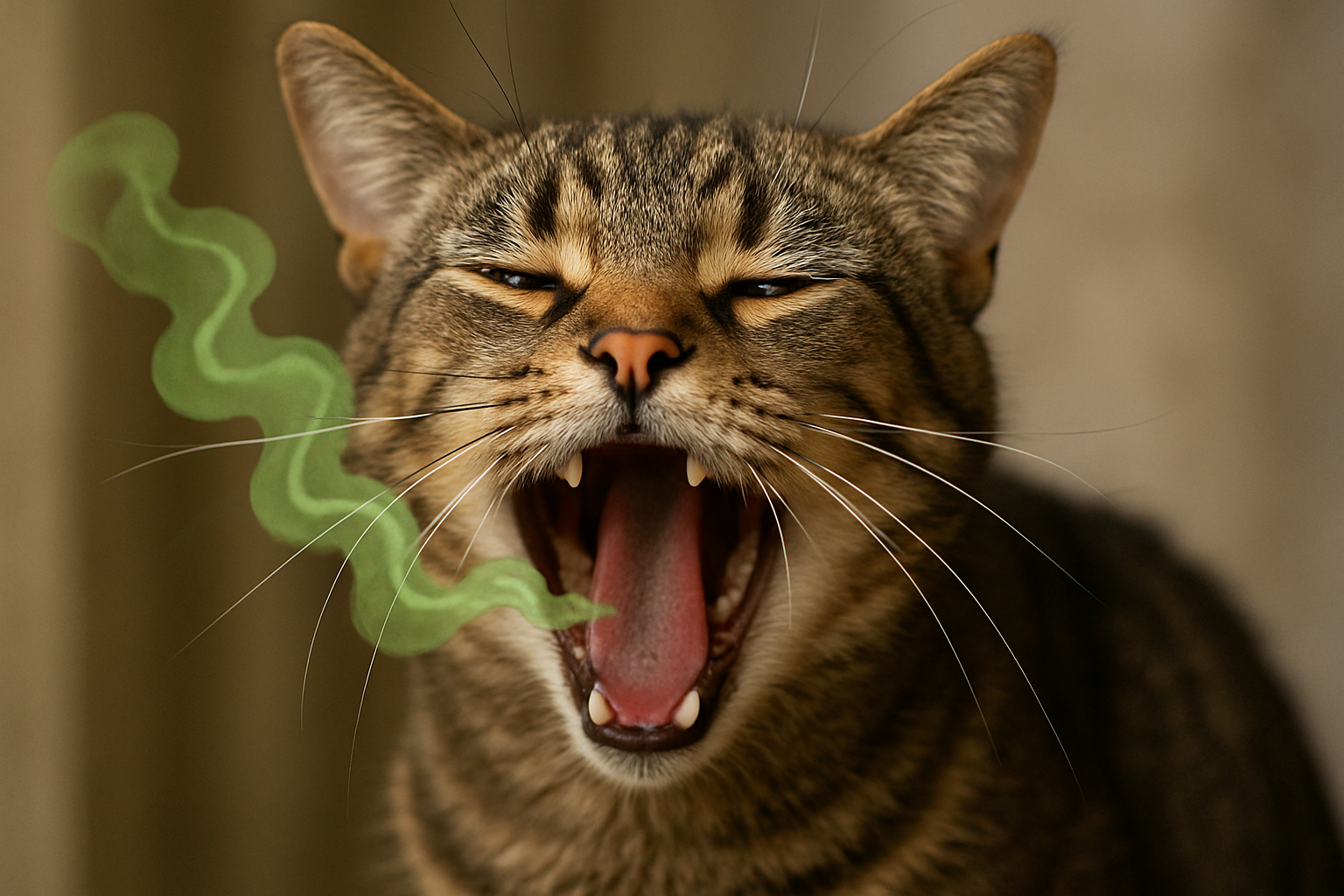
Bad breath in cats usually means something’s up with their teeth or health, but you can tackle a lot of it at home with some pretty simple moves. Freshen your cat’s breath by checking their mouth, improving diet, trying safe DIY fixes, and starting a short home dental routine — little changes that honestly make a big difference.

This post covers warning signs, root causes, and the best at-home fixes. You’ll get real tips on brushing, safe natural treatments, food picks, and easy prevention to help you keep your cat’s mouth healthy and dodge bigger vet bills.
Recognizing Cat Bad Breath

Bad breath in cats might just be a mild mouth odor, or it could signal something more serious. You can spot the difference by checking your cat’s breath, teeth, gums, and eating habits for specific signs.
How to Identify Feline Halitosis
Open your cat’s mouth for a second and sniff near the back teeth. Normal cat breath is faint, nothing wild.
If you catch a strong, nasty, rotten, or ammonia-like smell, that’s halitosis and it needs your attention.
Watch for breath that stays bad—not just a weird smell after a meal.
Notice when the odor pops up—right after eating, all day, or just sometimes. Make a mental note if certain foods or treats seem to make it worse.
If your cat hates mouth checks, try sniffing near their cheek or whiskers instead.
Jot down how long the smell sticks around and any other odd signs.
Bring your notes to the vet if things don’t improve.
Common Signs of Dental Issues in Cats
Take a look at your cat’s teeth and gums. Yellow or brown tartar, red or swollen gums, or gums that bleed easily usually mean dental trouble.
Watch your cat eat. If they drop food, chew on just one side, or suddenly go off dry food, they might have a sore mouth.
Drooling, pawing at the mouth, and stinky breath together? That’s a red flag for dental problems.
Keep an eye out for:
- Obvious tartar or broken teeth
- Red, receding, or bleeding gums
- Trouble chewing or losing weight
- New drooling or face pawing
If you notice any of these, it’s time to book a dental check with your vet.
When Bad Breath Signals a Health Problem
Sometimes, the problem isn’t just in the mouth. Kidney disease can make breath smell like urine, and diabetes can give it a sweet or fruity odor.
Look for other warning signs: drinking or peeing more, vomiting, dropping weight, or just acting off.
If you see these along with bad breath, you might be dealing with a systemic illness.
Tell your vet exactly what you’re noticing. They’ll probably want bloodwork, urine tests, or dental X-rays to get to the bottom of it.
Understanding the Causes of Bad Breath
Cat bad breath usually comes from mouth issues, diet, or a health problem. When you know what’s causing it, you can pick the right fix—or know when to call the vet.
Oral Hygiene and Plaque Buildup
Plaque forms fast when bacteria mix with saliva and food bits on your cat’s teeth. In a few days, it hardens into tartar, trapping even more bacteria and making breath stink.
You’ll spot yellow-brown buildup, red gums, or a cat that’s suddenly picky about food. These are classic dental disease signs.
Brush with a pet-safe toothpaste to knock out plaque before it turns to tartar.
If your cat won’t let you brush, dental wipes, oral gels, or water additives for cats can help.
Vets clean teeth under anesthesia to remove tartar and check for abscesses or resorptive lesions that really crank up the odor.
Dietary and Lifestyle Factors
Wet food tends to stick to teeth and tongue more than dry, which can ramp up bacteria and odor.
Try a mix—add some dry dental kibble or use a Lickimat to help scrape the tongue and slow down plaque.
Cats who don’t drink much water get more concentrated mouth bacteria. Put out a few water bowls or fountains.
Dental treats, chew toys, and enzymatic water additives can all help.
Skip human foods like garlic, onions, or fishy scraps—they just make breath worse.
Medical Conditions Leading to Halitosis
Serious diseases can make breath smell awful. Kidney disease gives a urine or fishy smell because toxins build up, and diabetes sometimes makes breath fruity or sweet.
Oral infections—think tooth root abscesses, stomatitis, or resorptive lesions—cause nasty-smelling discharge and drooling.
If your cat’s losing weight, drinking more, still has bad breath after home care, or you spot mouth sores, get to the vet.
Bloodwork, dental X-rays, and a close look in the mouth will help your vet find the problem so you can actually fix it.
Essential At-Home Dental Care Techniques
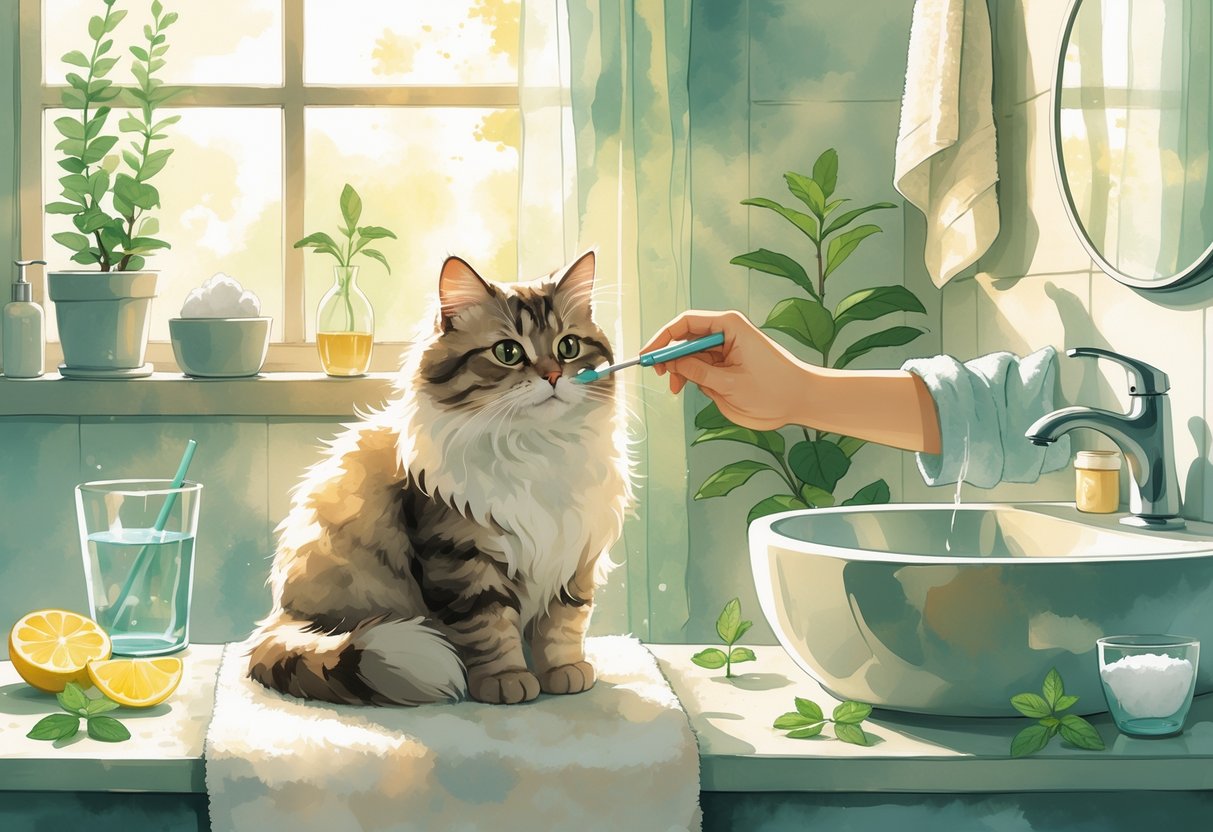
You can keep your cat’s breath fresher by cleaning their teeth, looking for dental issues, and picking the right tools.
Stick with steady habits, gentle handling, and products made for cats.
Using a Pet Toothbrush and Cat Toothpaste
Grab a soft, small pet toothbrush or a finger brush designed for cats. These actually fit in tiny mouths and reach back teeth.
Always use cat toothpaste—never human stuff. Most cats tolerate flavors like poultry.
Start with quick sessions, maybe 10–20 seconds per side. Focus on the outer tooth surfaces where plaque loves to hide.
Lift the lip gently and use small circles along the gum line.
If you see redness, swelling, or loose teeth, stop and call your vet.
Aim for brushing two or three times a week, but daily is ideal.
Keep everything clean and swap out the brush every few months.
Creating a Gentle Brushing Routine
Start slow. Touch your cat’s muzzle, then rub their gums with your finger so they get used to it.
Give a treat after each step to build positive association.
Go from finger to finger-paste to brush, just a few seconds at first.
Pick a calm time and hold your cat gently.
If your cat gets fussy, break up the routine into tiny sessions.
Jot down your progress: date, how long you brushed, and any weird signs like drooling or bleeding.
If you spot stubborn bad breath, mouth pawing, or trouble eating, check in with your vet.
Dental Wipes and Sprays as Alternatives
Sometimes brushing just isn’t happening. Dental wipes and sprays are a decent backup.
Use wipes made for cats—rub plaque off teeth and gums, especially up front and on the sides.
They won’t clean the back molars as well, but it’s better than nothing.
Sprays with antiseptic stuff can cut down bacteria and freshen breath.
Spray along the gum line and let your cat swallow—most cat-safe sprays are fine in small doses.
Always check the label and skip anything with alcohol or harsh oils.
If wipes or sprays don’t help after a few weeks, or you spot inflamed gums, stinky breath, or appetite loss, call your vet for a pro cleaning.
Natural and DIY Remedies for Cat Bad Breath
You can fight cat bad breath with a few safe, easy home tricks.
Try gentle herbs, proven foods, and hands-on dental stuff that targets bacteria, lowers plaque, and helps digestion.
Safe Herbal Additions to Your Cat’s Diet
Stick to small, safe amounts of breath-freshening herbs.
Flat-leaf parsley and wheatgrass have chlorophyll, which can help mask odor.
Sprinkle just a pinch (about 1/8 tsp) into your cat’s food—don’t overdo it.
Skip curly parsley and big doses of any herb; cats are sensitive.
Catnip and certain mint types can freshen breath and get your cat chewing.
Offer dried sprinkles or a tiny fresh leaf.
Only add one herb at a time and watch for vomiting, diarrhea, or appetite changes for a couple days.
If your cat reacts, stop and call your vet.
Popular Home Remedies: Coconut Oil, Probiotics, and More
Coconut oil can knock out some mouth bacteria thanks to lauric acid.
Start with 1/8 tsp in food once daily.
If your cat gets diarrhea, back off or stop. Don’t force oil directly into their mouth.
Probiotics for cats help balance gut bacteria, which can affect breath.
Use a vet-recommended powder or paste at the suggested dose.
Diluted apple cider vinegar (1/4 tsp in a water bowl) might help by changing mouth pH and slowing bacteria.
Only use it occasionally and skip it for cats with kidney or tummy issues.
Plain canned pumpkin (1 tsp) can help digestion and lower stool odor, which sometimes affects breath.
Check with your vet before starting new supplements.
Homemade Dental Treats and Chew Toys
Whip up simple dental treats that help scrape plaque and keep your cat busy chewing.
Try finely grated carrot or small bits of dehydrated chicken as toppers.
These give a mild abrasive effect and encourage chewing without extra sugar.
Make chew toys by stuffing a durable toy with coconut oil and a little powdered parsley or pet-safe chlorophyll.
Freeze the toy so it lasts longer and helps scrape teeth.
Rotate treats and toys to keep things interesting, and don’t overfeed.
Pair these with brushing and regular vet visits if bad breath keeps coming back.
Diet and Nutrition for Fresher Cat Breath
Good food and the right supplements can really help prevent bad breath in cats.
Focus on dry vs. wet textures, better ingredients, and supplements that target mouth bacteria and inflammation.
Choosing Dental Health Cat Foods
Go for foods labeled for dental health—bigger, crunchier kibbles can help scrub teeth as your cat chews.
Look for vet dental formulas or foods with the Veterinary Oral Health Council (VOHC) seal; those are actually tested for plaque or tartar reduction.
Check the ingredients: high-quality animal protein first, not too many carbs, and skip excessive fish or strong-smelling additives that make breath worse.
If your cat has kidney disease or another condition, talk to your vet before changing diets.
Mix up textures carefully.
Wet food keeps cats hydrated but sticks to teeth more, so use dental dry food, treats, or feeding mats alongside wet food to help control plaque.
Don’t cut calories too fast—change things up slowly if you need to.
Supplements that Support Oral Hygiene
Try probiotics made for cats to balance both oral and gut bacteria. Daily use of strains like Lactobacillus might help slow down odor-causing bacteria.
Sprinkle probiotic powder or use a single-dose product as directed. Give it about 30–60 days before you decide if it’s working.
You can also look at enzymatic chews or water additives with digestive or salivary enzymes. These break down plaque film and can make a difference.
Pick products with clear dosing instructions and get your vet’s okay first. That way, you’ll avoid digestive upset or other surprises.
Fish oil or omega supplements sometimes lower gum inflammation in cats. That’s one way to tackle bad breath at its root.
If you’re tempted by herbal stuff like green tea extract or propolis, stick to veterinary-formulated options. Human supplements can be risky for cats, so double-check those labels and doses.
Always talk to your vet before you start any supplement. Bad breath might mean dental disease or even kidney problems, so if nothing improves, you’ll want professional testing.
Preventive Measures and Long-Term Care
Keep your routine simple and pay attention to any warning signs. If something seems off, don’t wait—get your vet involved.
Little daily habits and regular checks go a long way toward stopping bad breath and catching dental issues before they get big.
Establishing a Daily Oral Care Routine
Brush your cat’s teeth with pet-safe toothpaste at least three times a week. Daily is ideal, but let’s be real—that’s tough for most of us.
Use a soft feline toothbrush or a fingertip brush. Stick to short, gentle strokes on the outer surfaces, since that’s where plaque loves to hide.
Start slow. Let your cat taste the toothpaste first, then gradually spend more time brushing over a few weeks. No need to rush it.
Add dental chews or water additives approved for cats to help with tartar between brushings. If your cat likes crunchy dental kibble, that’s a bonus—but don’t count on food alone to do the job.
Keep your supplies where you’ll actually use them. Make brushing sessions calm—sit with your cat, offer a treat after, and take a break if they get stressed.
Monitoring for Early Signs of Dental Problems
Once a week, check your cat’s mouth while you’re petting them. Gently lift the lips and look for red or swollen gums, yellow-brown tartar near the gumline, broken teeth, or any visible pus.
If your cat’s breath suddenly gets much worse, that’s a classic sign of dental disease. Don’t ignore it.
Watch how your cat acts, too. Are they eating less, dropping food, pawing at their mouth, drooling more, or avoiding touch near their face?
Notice any weight loss or changes in how much they drink. Sometimes dental pain or other illnesses show up in these little ways.
Jot down what you see and when it happens. That way, you’ll have clear notes to share with your vet if you need to.
When to Seek Veterinary Assistance
Book a vet appointment if you notice thick tartar, gums that bleed, or teeth that look loose or broken. A sudden, powerful bad smell from your cat’s mouth is another red flag.
These problems usually mean your cat needs a professional cleaning, x-rays, or maybe even extractions with anesthesia. If your cat stops eating, starts losing weight, or shows signs of severe pain, call your vet right away.
Jot down a quick list of symptoms before your visit, and snap a few photos if you can. Ask your vet if dental x-rays make sense and what the rough cost and recovery time might be.
Stick closely to the aftercare instructions—give any pain meds, serve up soft food if they suggest it, and don’t skip follow-up visits. That’s your best shot at keeping dental issues from coming right back.
